
showLoading is invoked when the SDK enters or exits a loading state. By default, the SDK shows its own full-screen loader; override this controller to render your own.
The loader you get by default
While the SDK works (payment creation, 3DS, loading its forms) shoppers see a simple spinner: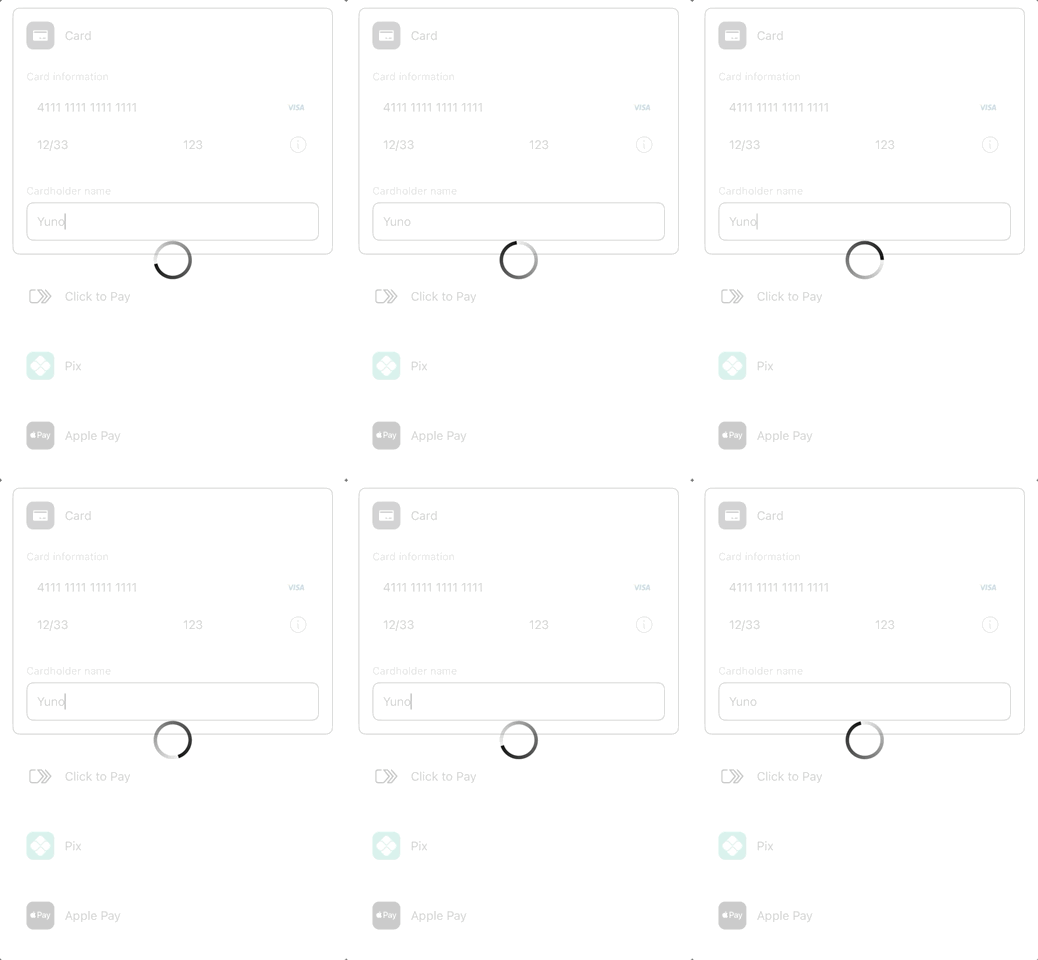
The default spinner, shown while the SDK works.
Want your own loader instead?
OverrideshowLoading and render whatever fits your brand.
If you do not override this controller, the SDK shows a full-screen loader during tokenization, payment creation, 3DS, and status polling. This also applies when you override showView and embed the SDK’s form in your own screen: on Android the loader covers the Activity you pass to Transaction.start, so nothing is rendered inside your layout and back is swallowed while it is on screen. One exception on iOS: while the list from getPaymentMethodsViews is on screen and the SDK has no view of its own presented, the loader is the list itself, dimmed with a spinner, so the shopper keeps seeing it. Once an SDK view is up, the loader moves there.
When you override it, the SDK does not show a loader of its own. Instead, it emits isLoading: true when entering a loading state and isLoading: false when leaving it. You render your own loader based on those values. On Web, treat each call as the current state, show or hide, instead of counting calls. A headless or secure-fields start() can report true more than once before the matching false.
The controller can be invoked multiple times during a single transaction as the SDK enters and exits loading states.
On iOS you can keep the SDK loader for some flows and show your own for others. Call SdkPayments.defaultShowLoading(isLoading:) from your override to run the default behavior:
Signature
- Web
- iOS
- Android
Threading
On iOS and Android,showLoading is invoked on the main thread. You can update UI directly from inside this handler.
Related
showView(iOS, Android). Controls form rendering.